
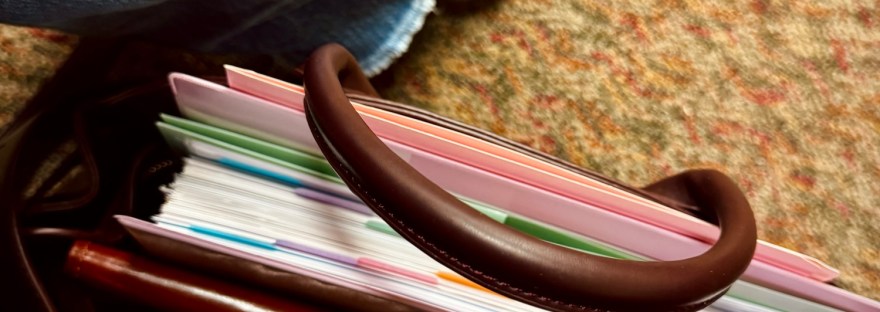
Because sometimes the hardest part isn’t the disease. It’s everything that comes with it.
I’ve gotten pretty damn good at looking like I have my shit together.
The hair is done. The makeup is on. The nails match. The outfit is coordinated, the heels are probably entirely impractical, and there’s a color-coded system somewhere attempting to organize the chaos that is my life.
From the outside, I can understand why people might assume I’ve got everything handled.
And sometimes, I even convince myself.
But there is an entire side of living with autoimmune diseases that most people never see. A side that doesn’t photograph well, doesn’t make for particularly entertaining conversation, and certainly doesn’t coordinate with my outfit.
It’s not just the pain. Or the fatigue. Or the days my body decides that functioning is apparently an optional activity.
It’s the sheer amount of work that goes into being sick.
And I am so unbelievably tired of working this hard just to be unwell.
The Full-Time Job Nobody Applied For
Living with lupus, dysautonomia, and the various other medical plot twists my body has so generously provided means that being a patient has practically become another full-time job.
Except there’s no paycheck, no vacation time, and the benefits package is absolute shit.
There are appointments to schedule, specialists to coordinate, referrals to chase down, insurance companies to deal with, medications to manage, tests to complete, and results to understand.
And the waiting.
Good God, the waiting.
You wait weeks or months to see a specialist. You spend those weeks desperately hoping this appointment will be different. That someone will connect the dots. That the next test will explain something. That maybe, just maybe, you’ll leave with an actual plan.
Meanwhile, your body doesn’t particularly care that the next available appointment is three months away.
It’s still hurting.
It’s still exhausted.
It’s still doing things you can’t explain.
And you’re still expected to show up for your life as though nothing is happening.
Trying to Remember Everything While Your Brain Forgets Everything
Before an appointment, I try to prepare.
I make lists. I organize records. I mentally rehearse everything I need to explain.
When did this symptom start? How often does it happen? What makes it worse? What makes it better? Is it related to the last flare? Is it a side effect? Is it something new?
And because apparently having a body that doesn’t cooperate wasn’t quite enough, my brain sometimes decides to join the rebellion.
Brain fog is a special kind of cruel when you’re trying to advocate for yourself.
You can be an intelligent, organized, capable woman who manages people, problems, schedules, finances, and approximately seventeen crises before lunch.
And then sit in an exam room unable to remember the very thing you spent three weeks trying not to forget.
Suddenly, you’re questioning yourself.
Did I explain that correctly?
Did I forget something important?
Did I make it sound worse than it is?
Or worse, did I make it sound better than it is because I’m so damn accustomed to minimizing my own suffering?
And underneath all of that is a question I wish I didn’t have to ask.
Do they even believe me?
The Exhaustion of Having to Be Believed
There is something incredibly defeating about having to repeatedly explain pain that you live with every single day.
Pain you wake up with.
Pain you work through.
Pain you smile through.
Pain you have learned to disguise so well that sometimes people seem genuinely surprised to discover you’re suffering.
And the irony isn’t lost on me.
I’ve spent years learning how to function despite what my body is doing, only to find myself worrying that functioning too well makes my suffering less believable.
I can sit in an exam room with my makeup perfectly applied and my hair in place while my body feels like it’s waging an all-out war against itself.
Both things can be true.
I can look healthy and be very sick.
I can laugh and be in pain.
I can be capable and still need help.
And I shouldn’t have to look like I’m dying to be believed when I say I’m struggling to live.
The Empty Chair Beside Me
This might be one of the hardest parts for me to admit.
People offer to come.
They offer to drive, sit with me, listen, take notes, ask questions, or simply be there.
And what do I do?
I tell them I’m fine.
Of course I do.
Because I’m independent. Because I’ve spent most of my life figuring things out. Because asking for help has never come naturally to me.
And because somewhere deep inside, there is still a part of me that believes needing too much will eventually make me too much.
I don’t want to inconvenience anyone.
I don’t want someone rearranging their day because my body decided to rearrange my entire life.
I don’t want to be another responsibility on someone else’s already overflowing plate.
So I go alone.
I sit in the waiting room.
I walk into the exam room.
I listen to complicated explanations, try to process unfamiliar terminology, remember recommendations, and formulate questions while simultaneously attempting not to cry.
And sometimes I walk out wishing more than anything that I had simply said yes when someone offered to come.
Not because I wasn’t capable of going alone.
But because being capable of doing something alone doesn’t mean it isn’t breaking your heart to.
And that distinction is something I’m still learning.
The Drive Home
This is the part nobody sees.
The appointment is over. The paperwork is tucked into my purse. There might be another prescription, another referral, another round of testing.
Sometimes there are answers.
Sometimes there are more questions.
And sometimes the answers themselves are frightening.
I make it through the appointment. I thank everyone. I smile politely. I walk out looking like the same put-together woman who walked in.
Then I get into my car.
And something inside me gives way.
Sometimes I sit there staring through the windshield, trying to process everything I just heard.
Sometimes the tears start before I’ve even left the parking lot.
And sometimes I’m driving home in a complete emotional haze, tears rolling down my face, screaming at the unfairness of it all.
Not because I don’t appreciate the life I have.
Not because I’ve given up.
But because I am so incredibly tired.
Tired of hurting.
Tired of waiting.
Tired of trying another treatment.
Tired of wondering which symptom deserves the most attention today.
Tired of trying to determine what’s a flare, what’s a medication side effect, and what’s an entirely new problem.
Tired of being afraid of what comes next.
And sometimes I find myself pleading with God.
Please.
Please, just help me.
I am trying so damn hard.
I don’t need everything to be perfect. I don’t need some miraculous life without problems.
I just need a break.
I need answers.
I need to feel like my body belongs to me again.
And sometimes the only thing I can manage is to cry.
Not the pretty, cinematic kind of crying.
The ugly, angry, exhausted kind.
The kind that comes from carrying far more than anyone realizes for far longer than you know how to explain.
And Then Life Goes On
Here’s the part that almost feels ridiculous.
Eventually, I pull myself together.
I wipe my face.
I check my mascara.
I take another minute to make sure I look like myself.
And then I go back to my life.
Because there are responsibilities waiting. People depending on me. Things that need handled. Bills that don’t care about autoimmune diseases. A career I love. Relationships I cherish. Dreams I’m still determined to chase.
And a whole world that continues spinning whether I’m physically capable of keeping up or not.
So I keep going.
Sometimes gracefully.
Sometimes stubbornly.
Sometimes held together by caffeine, concealer, a prayer, and a truly unreasonable amount of determination.
But I keep going.
And I know there are people who see me doing exactly that and assume it must not be so bad.
Because I still dress up.
I still laugh loudly.
I still make inappropriate jokes at perfectly inappropriate times.
I still love wholeheartedly.
I still show up.
What they don’t understand is that those things aren’t proof that I’m not suffering.
They’re proof that I am still desperately trying to hold on to the pieces of myself that this disease hasn’t taken.
The Woman Who Handles Everything Needs Handling, Too
I have spent so much of my life being the person who figures things out.
The organizer. The problem solver. The caretaker. The one who can handle it.
And I am proud of those parts of myself.
But chronic illness has a particularly brutal way of forcing you to confront the difference between being strong and being scared to admit you need others. 🙄
Because I don’t always want to be the strongest person in the room.
Sometimes I want someone else to remember the questions.
Someone else to understand the results.
Someone else to say, “I’ve got this part. You don’t have to.”
Sometimes I want to be able to admit that I’m scared without immediately following it with a joke to make everyone else comfortable.
Sometimes I want to be the person being cared for instead of the person making sure everyone else is okay.
And sometimes, as difficult as it is to admit, I just don’t want to do this anymore.
Not life.
Not loving.
Not dreaming.
I don’t want to keep fighting this hard just to get through an ordinary day.
There is a difference.
A very important one.
I’m slowly, painfully and stubbornly learning that accepting help doesn’t make me weak. That allowing someone to sit beside me in an exam room doesn’t make me a burden. That the people who genuinely love me aren’t keeping score of how much I need them.
And I’m learning that perhaps the strongest thing I can do isn’t always to handle everything.
Perhaps sometimes it’s admitting that I can’t.
What I Wish People Understood
When you see someone living with chronic illness, you’re seeing a fraction of their reality.
You don’t see the hours spent researching symptoms, organizing records, fighting insurance, or waiting for the phone to ring.
You don’t hear the internal debate about whether a new symptom warrants another appointment or whether they’re simply too exhausted to start the process again.
You don’t see the anxiety before the appointment, the emotional exhaustion afterward, or the tears in the parking lot.
You don’t see how much courage it can take to walk into yet another exam room and explain, once again, that something is wrong.
And you certainly don’t see how much strength it takes to go home afterward and continue being a person instead of becoming nothing more than a patient.
I’m not sharing this because I want pity.
Good Lord, please don’t pity me.
I’m sharing it because I want people to understand.
Because maybe someone reading this is sitting in their car outside a doctor’s office right now, wondering how much longer they can keep doing this.
Maybe someone else is staring at a calendar full of appointments and wondering how they’re supposed to have a life between them.
Maybe someone has declined help for the hundredth time because they don’t want to feel like a burden.
And maybe someone who loves a chronically ill person will read this and realize that they should keep offering to go to those appointments, make some decisions for them, figure out a small thing they need without asking what they need, take some of the pressure off of them.
Still Me. Still Fighting. Still Learning.
I don’t know what the next appointment will bring.
I don’t know what my body will decide to do tomorrow.
I don’t know how many more tests, treatments, referrals, or unanswered questions are waiting for me.
And I absolutely hate that uncertainty.
But I do know that I am more than my medical records.
More than my diagnoses.
More than the woman crying in her car after another appointment.
I’m still the woman who loves bright colors, ridiculous heels, perfectly coordinated outfits, and laughing until my stomach hurts.
I’m still the woman who loves fiercely, leads with her heart, and has dreams far bigger than the limitations her body keeps trying to impose.
I’m still learning. Still growing. Still healing in ways that have absolutely nothing to do with a prescription.
And I’m learning that I don’t have to be grateful for every painful lesson just because I’ve managed to survive it.
Some of this simply sucks.
Some of it is unfair.
And some days, I am angry, heartbroken, hopeful, grateful, terrified, and determined all at once.
Two things can be true.
I can love my life and hate what my body puts me through.
I can be strong and absolutely exhausted.
I can be fiercely independent and desperately need someone beside me.
I can have faith and still scream at God through my tears.
And I can be incredibly proud of the woman I’ve become while grieving the parts of myself I’ve lost along the way.
So tomorrow, I’ll probably do what I always do.
Get up. Get dressed. Match my nails to something entirely unnecessary. Put on my heels. Make another list. Show up for another day.
But I’m working on one very important change.
The next time someone offers to come along, maybe I’ll let them.
Because I have spent enough of my life proving that I can survive hard things alone.
Maybe this chapter isn’t about proving how much more I can carry.
Maybe it’s about finally believing that I deserve to be carried sometimes, too. 💜

